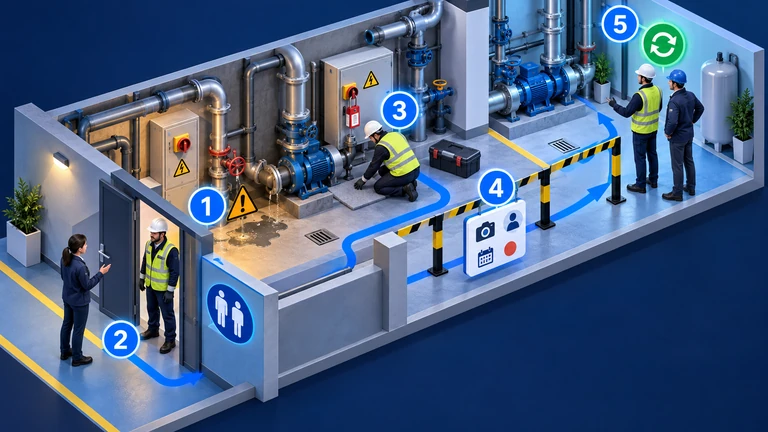
When it comes to keeping your equipment running smoothly and avoiding costly breakdowns, having a solid PPM schedule sets you up for success.
A Planned Preventive Maintenance (PPM) schedule for your HVAC equipment helps you stay ahead of any issues by organising maintenance tasks, assigning them to the relevant person, and setting clear timelines for all tasks.
Whether you’re managing a small team or a much larger operation, a well-thought-out PPM schedule can save you time, reduce any unexpected breakdowns, and extend the life of your assets.
Let’s explore what a PPM schedule includes, why it’s so important, and how you can create one that works well for your business.
What a PPM Schedule Includes
When you're managing equipment maintenance, having a well-planned and organised PPM schedule is essential to keep everything running smoothly.
Simply put, a PPM schedule is a detailed plan that outlines all preventive maintenance tasks. It specifies when each task should occur and who is responsible for carrying them out.
It’s like a roadmap that helps you stay on top of regular upkeep, avoid unexpected breakdowns, and extend the life of your assets.
Defining a PPM Schedule
PPM schedules are a detailed timeline with tasks and responsibilities assigned.
Having a detailed timeline means every maintenance task is planned out properly, and responsibilities are clearly assigned to the right maintenance personnel.
They are critical when it comes to the overall preventive maintenance strategy by providing a proper, structured timeline that helps businesses stay ahead of equipment issues.
They break down complicated maintenance needs into manageable, scheduled actions, ensuring nothing gets overlooked. You can integrate a PPM schedule into your maintenance workflow to help coordinate routine maintenance tasks alongside other daily operations
Preventive Planned Maintenance (PPM) Schedule Checklist
Use this checklist to ensure every preventive maintenance task is clearly defined, properly scheduled, and easy for your team to execute.
How a Smart PPM Schedule Improves Your Business
A smart PPM schedule takes the guesswork out of maintenance by making sure the right work gets done at the right time.
Instead of reacting to breakdowns, your team can stay ahead of issues, keep equipment running longer, and avoid costly disruptions. It helps maintenance fit naturally into daily operations, with less downtime and fewer surprises.
Lower Costs
A well-built PPM schedule can increase efficiency for field service operations. First off, it helps lower costs by shifting your maintenance approach from reactive to proactive.
If you catch issues early, you can avoid costly repairs. This means fewer emergency call-outs and less expensive downtime.
Reduced Downtime
Speaking of downtime, a smart PPM schedule reduces it.
By keeping equipment in tip-top shape with regular maintenance, you avoid unexpected breakdowns that can delay jobs and frustrate customers.
Better Compliance
Compliance is another big win. Regularly scheduled maintenance ensures you meet safety standards and regulations, which is especially important in industries with strict rules.
Plus, it increases workplace safety by preventing equipment failures that could lead to accidents.
Extended Asset Lifespan
Finally, a solid PPM schedule extends the lifespan of your assets. Routine checks and timely servicing prevent minor issues from getting worse, which means your equipment lasts longer and you save money on replacements.
All in all, a well-crafted PPM schedule keeps your field service best practices up to date, safe, and running cost-effectively.
How to Create a PPM Schedule
When you are creating a PPM schedule, you will need to detail the steps and best practices to plan a schedule that allows your business to take control of your maintenance jobs and provide the best customer service.
Creating an effective PPM schedule involves several key steps that help you stay organised, reduce downtime, and deliver top-notch service to your customers.
1. Inventory, Prioritisation, and Criticality
Begin by compiling a comprehensive asset list that includes all relevant details, such as make, model, serial number, location, and maintenance history of the equipment.
This comprehensive asset list allows you to properly understand the scope of your maintenance needs.
Once cataloged, prioritise assets based on their criticality to operations, identifying which equipment failures would cause the most significant disruptions or safety risks.
2. Define Intervals and Task Types
Have a look at historical maintenance data and failure modes to determine the ideal preventive maintenance intervals for each asset.
This ensures that maintenance occurs neither too frequently nor too infrequently. Choose the appropriate scheduling framework for each task, such as:
- Time-based schedules: Fixed or floating intervals based on calendar time.
- Usage-based schedules: Triggered by operating hours, miles, or cycles.
- Condition-based schedules: Using sensor data to monitor equipment health.
3. Follow Industry Standards (e.g., SFG20)
Follow industry best practices and standards, such as SFG20 or OEM guidelines, to inform your maintenance tasks and intervals.
This ensures your preventive maintenance strategy aligns with proven methods and regulatory requirements, enhancing compliance and safety.
4. Schedule and Assign Recurring Tasks
Utilise preventive maintenance software or a computerised maintenance management system (CMMS) to create and manage recurring work orders.
Assign tasks to maintenance personnel based on their expertise and availability. Providing detailed instructions, checklists, and necessary tools for each task ensures technicians can perform preventive maintenance work efficiently and correctly.
5. Monitor and Optimise Performance
Track the effectiveness of your PPM schedule by monitoring key performance indicators such as:
- Mean time to repair (MTTR)
- Mean time between failures (MTBF)
- Overall equipment effectiveness (OEE)
Use this maintenance data to identify areas for improvement, adjusting maintenance frequencies or procedures as needed to optimise asset performance and reduce unplanned downtime.
6. Enhance Communication and Documentation
Ensure clear communication between maintenance teams, schedulers, and operations staff to prevent missed or delayed tasks.
Use digital tools to document maintenance activities, capture photos, and log notes, creating a detailed maintenance history that supports continuous improvement and compliance audits.
Handy Tools to Make The Most of Your PPM Schedule
BigChange offers a comprehensive platform combining all aspects of maintenance job management under one roof, making it easier for businesses to simplify operations and improve efficiency.
By centralising job scheduling, dispatch, asset management, and customer communication, BigChange eliminates the need for juggling multiple disconnected tools.
Scheduling and Dispatch
- Job scheduling software provides easy job creation and drag-and-drop assignment, so you can quickly organise tasks without any hassle.
- Real-time updates to technicians via mobile app keep everyone in the loop, no matter where they are.
- Keeps office and field teams synchronised, ensuring communication flows smoothly, and nothing gets missed.
Field Mobility and Efficiency
- Route optimisation reduces drive time and emissions; 11% less per job, helping your team get to jobs faster while being kinder to the environment.
- Technicians access job histories, notes, and What3Words navigation, so they always have the info they need right at their fingertips.
- Quick logging of parts and stock means less paperwork and more time focusing on the job at hand.
Ensuring Compliance and Capturing On-Site Data
- Custom workflows enforce data, photo, and barcode capture, making sure every detail is recorded accurately and nothing slips through the cracks.
- Mandatory risk assessments (POWRA) with digital sign-off help keep your team safe and compliant by making safety checks a non-negotiable step.
- Photos and descriptions provide proof of service, giving you clear evidence that the job was done right and helping resolve any disputes quickly.
Centralised Asset and Customer Management
- 360° CRM view of customers, sites, and contracts, giving you a complete picture so you can manage relationships effortlessly.
- The mobile field services app provides access to the last 10 jobs and up to 90 archived photos, making it simple to review recent work and keep important details handy on the go.
- Integrations with Xero / Sage consolidate invoicing and payments, helping you get paid faster without the headache of manual entry.
How BigChange’s HVAC Software can Grow your Business
When you're ready to take your preventive maintenance scheduling and systemise it, BigChange offers the perfect solution to scale your entire maintenance process.
With BigChange's cloud-based platform, you can centralise your asset management, automate scheduling of recurring tasks, and ensure your maintenance team is always equipped with the right tools and information.
Whether you manage a small crew or a large team of maintenance technicians, BigChange’s field service management software helps you optimise resource allocation, reduce unplanned downtime, and extend equipment lifespan, whilst improving communication and compliance.
Don't let maintenance challenges slow down your operations. Experience firsthand how BigChange can transform your preventive maintenance programme into a proactive, efficient, and cost-effective system.
Book a demo today and discover the benefits of an effective preventive maintenance schedule powered by BigChange.