


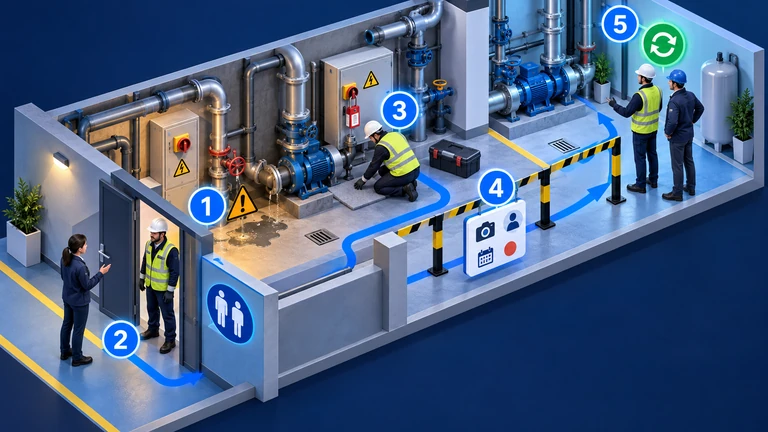
A workplace risk assessment is a structured check of potential harm, the people exposed and the controls for that risk. For a field service business, it connects the office's planned method with the conditions an engineer, technician or operative finds at the job site.
This guide takes you through the process and shows the difference between a hazard and a risk. You will also find a completed workplace risk assessment example for ladder work at a customer site.
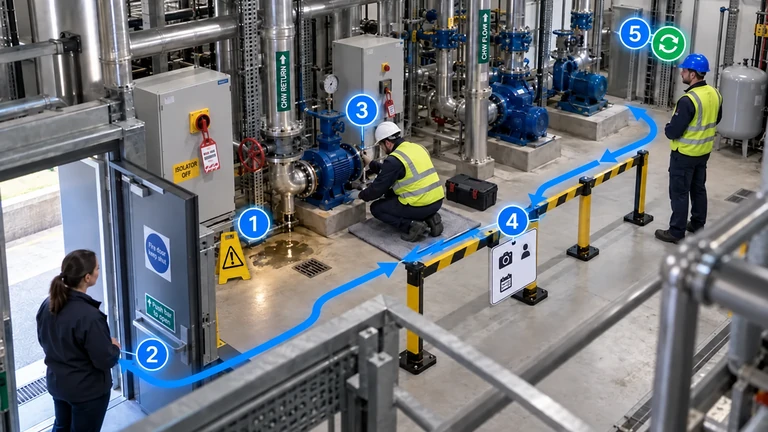
What is a workplace risk assessment?
A workplace risk assessment is a systematic way to identify hazards, identify the people at risk, judge the risk level and select controls. Its purpose is practical action. The work isn't complete simply because somebody filled in a form or selected a risk score. It turns observation into a clear work decision.
The British Safety Council's risk assessment certificate specification frames the process around identifying, evaluating and controlling risks. In day-to-day service work, look beyond a standard job description. Access, equipment, other contractors, customers and changing site conditions all shape how the team performs the work.
A useful assessment gives the person doing the job a clear decision. They proceed with the stated controls, add further controls, or stop and escalate because the work is not safe to begin.
What is the difference between a hazard and a risk?
A hazard is a potential source of harm. Risk combines the likelihood of harm with the outcome's possible severity. Separating the two clarifies what to examine and which action takes priority. Controls address that chain before harm occurs, keeping the assessment focused on action through every stage of the job.
Don't write vague hazards such as “working on site”. Name the condition with the potential for harm. This clarifies control selection and the test for whether it works.
What are the legal requirements for workplace risk assessments in the UK?
Under the Health and Safety Executive's risk-management guidance, UK employers and self-employed people have a duty to assess risks created by their work and take suitable steps to control them. Its scope needs to be proportionate to the work and good enough to protect people from foreseeable harm. For an organisation with five or more people, the significant findings belong in a written record.
The Health and Safety Executive's risk-management guidance says the record covers the hazards, the people at risk and what the business is doing to control the risks. The priority remains controlling the risk in practice, not producing paperwork for its own sake.
The HSE process also covers everyone exposed to risks from the work, not only permanent employees. Consider contractors, agency workers, visitors, customers and members of the public. Give specific consideration to people whose experience, health, working arrangements or environment changes their exposure.
Who should carry out a workplace risk assessment?
The employer remains responsible for managing health and safety. The employer, a competent worker or an external adviser completes the assessment. That person's skills, knowledge and experience cover the relevant hazards, risk judgements and suitable controls. The actual task and conditions, not the job title alone, determine the competence required.
HSE guidance on appointing a competent person permits an employer to appoint themselves, one or more workers, or somebody from outside the business. Where suitable competence exists internally, HSE says to use it. Outside advice suits complex, unusual or high-risk work, but outsourcing the task does not transfer the employer's legal duty.
How to carry out a workplace risk assessment in 5 steps
The five-step method moves from observation to action: identify hazards, decide who is at risk, evaluate the risks, record and implement controls, then review them. Each step produces information for the next person. The result needs to be a clear job decision, not a long list of hazards with no owner.
1. Identify the hazards
Start with the work as it happens. Walk through the task, workplace or customer site and look at equipment, substances, access, work methods and surrounding activity. Review previous incidents, near misses, defect reports and manufacturer instructions where they apply.
For mobile teams, separate hazards known before dispatch from field-only checks. Before dispatch, the team knows that a planned job involves a ladder. The engineer still checks the ladder's condition, the surface, nearby people, doors, traffic and weather before using it.
Ask practical questions:
- What energy, equipment, material or condition presents a source of harm?
- What changes during setup, normal work, cleaning, maintenance or an emergency?
- Does another contractor or customer introduce a hazard?
- Is there a safer way to complete the task without exposure to the hazard?
2. Decide who is at risk and how
Name groups of people rather than listing every individual. Include the person doing the work, colleagues, customers, visitors, other contractors and members of the public. Then state the potential harm for each group. “Engineer risks a fall while climbing” gives a concrete result. “Engineer at risk” does not.
3. Evaluate the risks and decide on controls
Consider both likelihood and severity, taking existing precautions into account. Address the most serious risks first. The HSE five-step process advises redesigning the job, replacing materials, machinery or processes, organising work to limit exposure, introducing practical safety measures and using personal protective equipment when further controls apply.
Write controls as actions. “Take care” is not a control. “Close the work area to customers throughout the task” tells the team what to do and gives a supervisor a verifiable check.
4. Record the findings and take action
Use the fields in the HSE risk assessment template: significant hazards, affected groups, existing controls and further actions. Give every further action an owner and a deadline. If the job cannot proceed until the action is complete, make that stop condition explicit. A risk assessment that identifies a problem but leaves it unowned has not controlled the risk.
Connect corrective work to the operational system that already assigns jobs. A clear work order management process keeps the action, responsible person, due date and supporting evidence attached to the job rather than separated in an email chain.
Use the HSE risk assessment template and examples as a starting point, then adapt the fields to the complexity of the work. Keep the record concise enough to use and detailed enough to show the decision made.
5. Review the controls and update the assessment
Review does not mean changing the date and filing the same form again. Check whether controls were put in place, whether people follow them and whether they reduce the risk as intended. Update the assessment when the work, people, equipment, substances or site conditions change.
HSE also advises reviewing controls when workers identify problems or after an accident or near miss. Build planned reviews into the same calendar used for maintenance and recurring work. Where risks relate to assets or scheduled service activity, a PPM schedule prompts the team to check that both the equipment and its associated working method remain current.
Workplace risk assessment example: an engineer using a ladder
This example shows how the five steps connect for a maintenance engineer using a portable ladder at a customer site. It is an illustration, not a substitute for assessing the real job. HSE permits ladders for low-risk, short-duration work with the right equipment and precautions. Treat each visit as a fresh site decision.

For ladder safety, the HSE ladder guidance says ladders are not automatically the first choice and sets out the right ladder and sensible precautions. When task duration, height or environment changes, reassess the equipment and controls.
What should a workplace risk assessment include?
The HSE says you can use its risk assessment template to keep a simple record of who might be harmed and how. Include the task and location, hazards, people at risk, possible harm, existing controls, further action, action owner, target date, assessor and review trigger. For mobile work, also record the site check and the stop conditions that send the operative back to the office.
How to make workplace risk assessments easier to manage
Put risk assessments inside the job workflow. The office attaches the relevant assessment to the job, and the field worker completes site-specific checks before starting. Both teams then view actions and evidence as part of the job record without waiting for paperwork to return, so office and field decisions share one reference from the start.
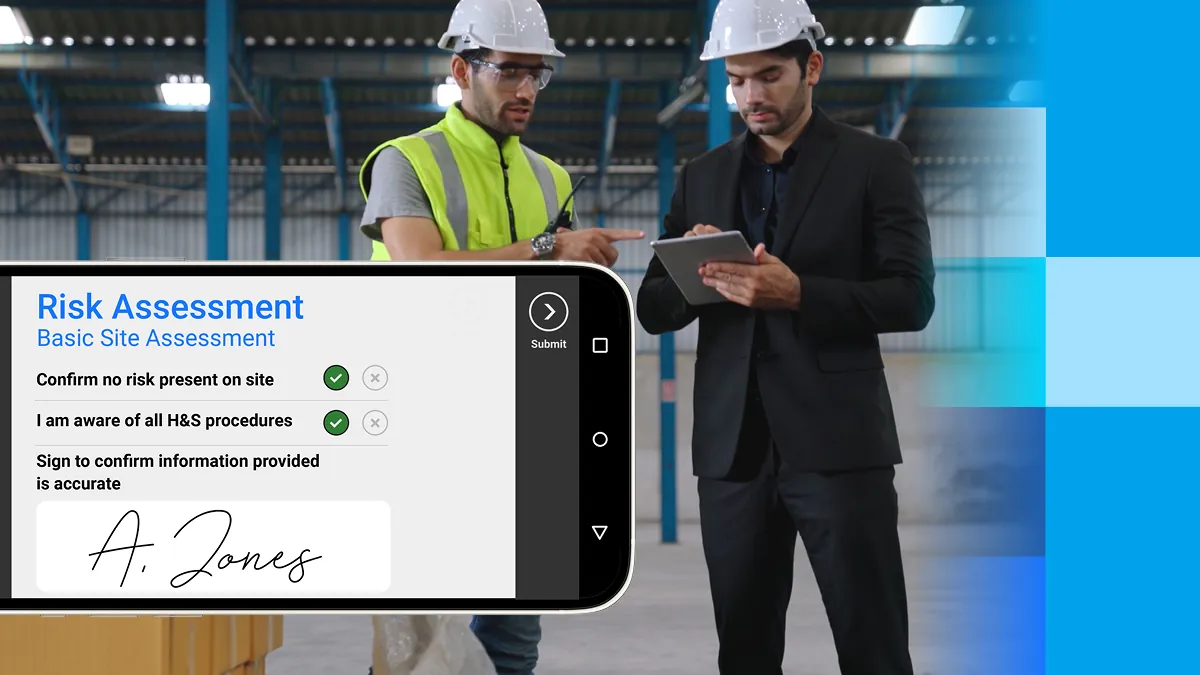
A practical digital process gives the business a way to:
- issue the correct assessment with the job
- include essential checks before work begins
- adapt questions to the task or site
- capture photos, notes and signatures where relevant
- raise an action when a control is missing
- make the latest record visible to the office and field team
- retrieve completed assessments when reviewing a job or incident
In practice, the goal is a working connection rather than a paper form on a screen. For an integrated option, consider job tracking software alongside risk assessment software for point-of-work assessments and RAMS.
Clearground's BigChange story shows the workflow in practice: each operative completes a customised dynamic risk assessment on site, prompting them to consider the environment and its risks before working. That is the operational goal: the assessment changes the decision at the point of work.
Keep workplace risk assessments part of the job, not extra admin
A strong workplace risk assessment gives someone a safer decision before and during work. Keep it proportionate, specific and connected to action. Give field teams a clear way to stop, add controls and escalate when the job in front of them no longer matches the plan.
Start with one recurring task. Map its hazards, affected people, controls and stop conditions. Test the assessment with the people who perform the work, then make review part of the job's normal closeout. Next, apply the method to another task.
Frequently Asked Questions
What is a risk assessment in the workplace?
This risk assessment is a structured examination of hazards, the people at risk and the controls needed to reduce that risk. The HSE risk-management process moves from identifying hazards and people at risk to evaluating, recording and reviewing controls. Practical action must follow rather than leaving a completed form in a file.
What are the 5 steps of a workplace risk assessment?
The five steps are to identify hazards, decide who is at risk and how, evaluate risks and choose controls, record significant findings, and review the controls. This sequence follows the HSE risk-management process and finishes with named actions, owners and review triggers for the team.
How often should a workplace risk assessment be reviewed?
Review the assessment when controls stop working, the workplace changes, workers identify a problem, or an accident or near miss occurs. HSE guidance does not set one universal interval for every task. Set a proportionate planned review date as well, based on the work and how quickly conditions change.
Does a workplace risk assessment need to be written down?
If you employ five or more people, you must record the significant findings, including hazards, the people at risk and the control measures. The HSE template and examples provide a practical structure. A smaller business still benefits from a written record that supports communication and review.


